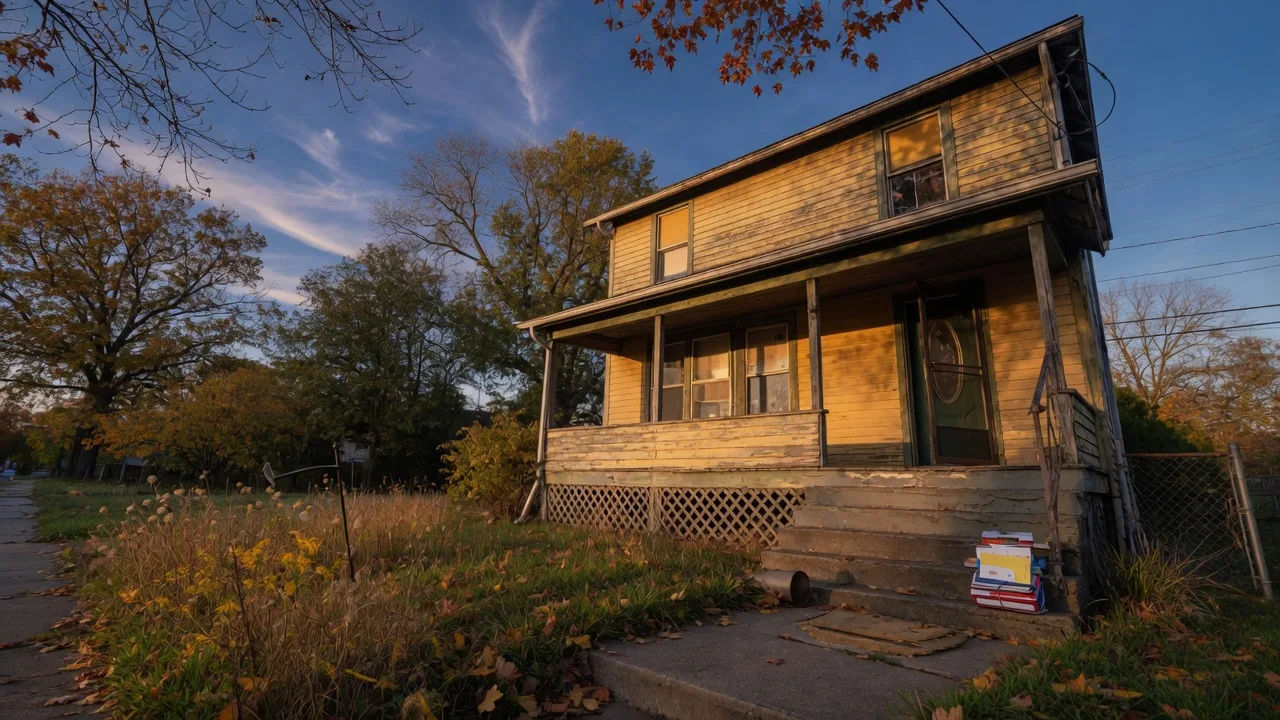

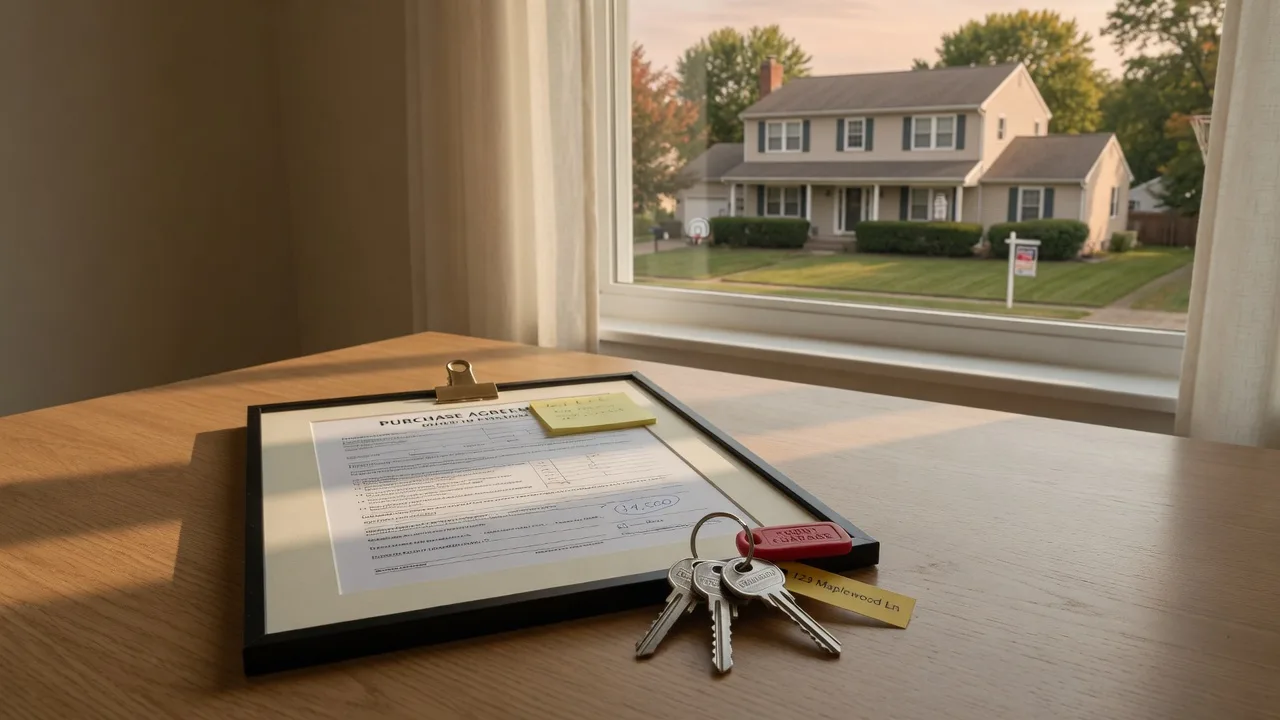
When a buyer writes an offer on a home, the money that comes with it can be as important as the price on the page. For a Northeast Ohio seller preparing to sell a home that needs work, understanding earnest money is one of the clearest ways to judge how serious each buyer really is and how protected the seller is if a deal falls apart.
Earnest money is the deposit a buyer puts down to show good faith that they intend to follow through on their offer. It is not required by law in Ohio, but it is standard practice in almost every residential sale. When several buyers compete for the same home, the size and quality of these deposits become a practical way to separate serious offers from casual ones.
This article explains what earnest money is, where it is held, what happens to it when a sale moves forward or falls through, and why it matters even more when you are selling a home that needs work. It is written for sellers who want to compare offers with confidence rather than guess at what they mean.
What Earnest Money Is
Earnest money is a good-faith deposit that accompanies a buyer's offer. When the offer is accepted, the buyer deposits the money as proof that they are committed to the transaction. If the sale closes, the deposit is credited toward the purchase price. If the sale does not close, the money either returns to the buyer or is forfeited, depending on which party caused the deal to fall through and what the purchase contract says.
The amount varies from one offer to the next. It is often expressed as a percentage of the purchase price, with 1 percent to 3 percent being a common range. On a home priced at $250,000, that means a deposit between $2,500 and $7,500. In a competitive situation, buyers sometimes offer more than the typical range to make their offer stand out.
For the seller, the deposit is not a formality. It is the buyer putting real money on the table. The larger the deposit, the more the buyer stands to lose by walking away, which is why it reads as a strong signal of commitment.
Where the Deposit Is Held in Ohio
In Ohio, earnest money is held by a neutral third party, never directly by the seller. It is placed in a dedicated escrow or trust account that is kept separate from the broker's operating funds. Acceptable escrow holders are typically a licensed real estate brokerage, a title company, or an attorney's trust account, and the purchase contract specifies which one will hold the money.
This separation matters. Because the deposit sits in trust with a neutral party, neither the buyer nor the seller can simply take the funds without an agreement. If the parties cannot agree on who receives the money after a dispute, Ohio law directs the escrow holder to keep the deposit in trust until the parties sign a written disbursement agreement or a court orders its release. That rule keeps the process fair and gives both sides a clear path forward.
The practical takeaway for a seller is simple: earnest money is safe, it is accounted for, and it is never sitting in the seller's own bank account before closing. It is protection that becomes real only when it is needed.
Why Earnest Money Matters More on a Home That Needs Work
When a home needs repairs, buyers ask more questions, inspections dig deeper, and the transaction carries more scrutiny than a move-in ready sale. That means a seller has a reason to favor buyers who demonstrate real commitment, and the earnest money deposit is one of the clearest demonstrations available.
The documented results of competitive sales show why this matters. A Willoughby home that needed approximately $61,000 in repairs received 8 competing offers and sold for $76,100 above list price. A Mentor fixer-upper listed in December drew 35 showings in five days and sold for $48,100 above list price. In both cases, strong buyer competition, not renovation, drove the outcome.
Curious What Your Home Could Sell for Without Making a Single Repair?
Most Northeast Ohio homeowners are surprised when they see the number. Enter your address and see what buyers could offer for your home as it sits today. It takes about 60 seconds, with no obligation and no pressure.
See My Home's PotentialWhen a seller reviews multiple offers on a home that needs work, the earnest money deposit helps rank which buyers are most likely to follow through. A buyer who has financed, inspected, and thought through renovations before offering is a different kind of buyer than one who is still deciding. The deposit is one of the best indicators available for telling the two apart.
What Happens to the Deposit When a Sale Falls Through
The most important protection earnest money provides comes into play when a sale does not close. What happens to the deposit depends on why the deal fell apart and what the purchase contract says.
If the buyer backs out for a reason covered by a valid contingency, such as an inspection, financing, or appraisal contingency, the deposit is typically returned to the buyer. That is expected and fair, and it is one of the reasons sellers review contingencies as closely as they review price.
If the buyer backs out without a valid contingency, misses a contractual deadline, or otherwise breaches the agreement, the seller is generally entitled to the forfeited earnest money. In many Ohio purchase agreements, this amount acts as liquidated damages, meaning the forfeited deposit is the agreed measure of what the seller recovers for the buyer's breach. The deposit then compensates the seller for the time the home was off the market and the opportunity lost.
This is why the terms matter as much as the number. A large deposit is only meaningful if it is backed by clear contract language about how it is forfeited. Sellers who compare offers side by side, looking at the deposit together with the contingencies, get a much more accurate picture of their real protection than sellers who look at price alone.
How to Read Earnest Money Within a Set of Competing Offers
When multiple offers arrive on the same home, the strong offers tend to share a few traits. They come from pre-approved buyers with a credible lender. They carry fewer and tighter contingencies. And they are backed by earnest money deposits that are meaningful relative to the price. None of these signals is the whole story on its own, but together they distinguish a committed buyer from a hesitant one.
Across every listing in Northeast Ohio using the 5-Day System, the average sale has been $43,520 above the original list price, with no repairs made by the seller. That average is the product of many individual offers, and in every one of them the seller had to weigh price against terms. An offer with a slightly lower price and a much larger deposit can, in many cases, protect the seller better than a higher offer with a thin deposit and loose contingencies.
A flexible close date and a large deposit often reveal a buyer who can move. On a home that needs work, where timing and follow-through matter, that combination is worth real weight when the seller chooses the winning offer. The clearest breakdown of how offers compare in practice, including the deposits and terms that went with each price, is documented in the case studies.
Questions Sellers Ask Most
Sellers often wonder whether a bigger deposit is always better. The honest answer is that it is a strong positive signal, but it is not the only one. A deposit should be judged alongside financing, contingencies, and the confidence behind the offer. A sane, well-funded offer with a moderate deposit can be stronger than an aggressive offer with a large deposit and financing that is not yet secured.
Sellers also ask what happens if there is no deposit at all. In Ohio a deposit is not mandatory, but an offer without one is usually a sign that the buyer is less serious or less prepared. In a competitive sale, deposit-free offers rarely win, precisely because the seller has better-protected options to choose from.
For practical answers to the other questions sellers bring up most about selling as-is and comparing offers, the FAQ page is a good place to start. It walks through the concerns that come up again and again once a home that needs work goes on the market.
The Bottom Line on Earnest Money
Earnest money is one of the clearest, most concrete protections a seller has. It signals how serious a buyer is, it is held safely in trust by a neutral party, and it compensates the seller if a buyer backs out without a valid reason. For a Northeast Ohio seller of a home that needs work, learning to read the deposit within each offer is a skill that pays off directly.
When offers compete and prices rise above list, the deposit is the part of the offer that protects the result after the price is set. Understanding it turns an intimidating stack of paperwork into a clear, comparable set of choices, and it gives the seller confidence that the strongest offer on paper is also the offer most likely to close.
Rob Minton is the author of How to Sell Your Home in 5 Days, available free for Northeast Ohio homeowners at go.5daysystem.com.
Rob Minton's 5-Day System has been published on Yahoo Finance, Morningstar, and GlobeNewswire.
Rob Minton is a Northeast Ohio real estate agent and the creator of the 5-Day System. With over 30 years of experience in Cuyahoga, Lake, and Geauga counties, Rob has helped homeowners sell homes that need work for an average of $43,520 over list price.